
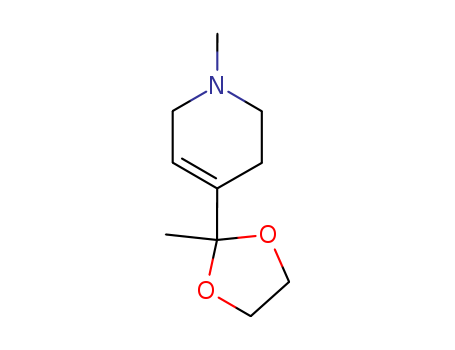
- Chemical Name:1,2,3,6-tetrahydro-1-methyl-4-(2-methyl-1,3-dioxolan-2-yl)pyridine
- CAS No.:60553-32-4
Reputable supplier selling 1,2,3,6-tetrahydro-1-methyl-4-(2-methyl-1,3-dioxolan-2-yl)pyridine 60553-32-4 with stock
- Molecular Formula:C10H17 N O2
- Molecular Weight:183.25
- Vapor Pressure:0.0253mmHg at 25°C
- Boiling Point:247.7°C at 760 mmHg
- Flash Point:86.5°C
- Density:1.067g/cm3
1,2,3,6-tetrahydro-1-methyl-4-(2-methyl-1,3-dioxolan-2-yl)pyridine(Cas 60553-32-4) Usage
|
Structure |
A derivative of pyridine with a tetrahydropyridine ring, a methyl group, and a 1,3-dioxolane ring |
|
Organic synthesis |
Used as a building block for more complex molecules |
|
Pharmaceutical research |
Potential use in the development of new drugs or as a research tool for studying the biological activity of pyridine derivatives |
|
Agrochemicals |
May have uses in the field of agrochemicals |
|
Precursor |
Used as a precursor in the production of other chemicals |
|
Tetrahydropyridine ring |
A six-membered nitrogen-containing ring with four carbon atoms and two nitrogen atoms, all in a saturated state |
|
Methyl group |
A single carbon atom bonded to three hydrogen atoms (-CH3) |
|
1,3-Dioxolane ring |
A four-membered ring containing two oxygen atoms and two carbon atoms |
|
Reactivity |
May undergo various chemical reactions due to the presence of the tetrahydropyridine and 1,3-dioxolane rings |
|
Solubility |
Likely soluble in organic solvents such as ethanol, methanol, or acetone |
|
Boiling point |
Not provided, but expected to be relatively high due to the molecular size and complexity |
|
Melting point |
Not provided, but expected to be relatively low due to the presence of the 1,3-dioxolane ring |
|
Density |
Not provided, but expected to be influenced by the molecular structure and size |
|
Appearance |
Not provided, but likely a colorless to light-colored solid or liquid depending on the temperature and purity |
|
Toxicity |
Not provided, but should be handled with care due to its potential biological activity |
|
Hazards |
Not provided, but may pose risks such as flammability, irritancy, or reactivity with other chemicals |
|
Storage |
Should be stored in a cool, dry, and well-ventilated area, away from incompatible substances and sources of ignition |
|
Synthesis |
Not provided, but likely synthesized through various chemical reactions involving the formation of the tetrahydropyridine and 1,3-dioxolane rings, as well as the introduction of the methyl group. |
|
General Description |
1,2,3,6-tetrahydro-1-methyl-4-(2-methyl-1,3-dioxolan-2-yl)pyridine is a chemical compound with the molecular formula C11H17NO. It is a derivative of pyridine and contains a tetrahydropyridine ring with a methyl group and a 1,3-dioxolane ring. 1,2,3,6-tetrahydro-1-methyl-4-(2-methyl-1,3-dioxolan-2-yl)pyridine is often used in organic synthesis and pharmaceutical research as a building block for more complex molecules. It may also have potential applications in the development of new drugs or as a research tool for studying the biological activity of pyridine derivatives. Additionally, 1,2,3,6-tetrahydro-1-methyl-4-(2-methyl-1,3-dioxolan-2-yl)pyridine may have uses in the field of agrochemicals or as a precursor in the production of other chemicals. |
InChI:InChI=1/C10H17NO2/c1-10(12-7-8-13-10)9-3-5-11(2)6-4-9/h3H,4-8H2,1-2H3
60553-32-4 Relevant articles
Synthesis and in vivo and in vitro evaluation of isoarecolone and derivatives
Beach, J. Warren,Damaj, M. Imad,Jonnala, Ramamohana R.,Terry Jr., Alvin V.,Buccafusco, Jerry J.
, p. 510 - 522 (2007/10/03)
The synthesis of the N-ethyl and N-pheny...
An Improved Synthesis of 1-(1,2,3,6-Tetrahydro-1-methyl-4- Pyridinyl)ethanone, Isoarecolone
Beach, J. Warren
, p. 1861 - 1863 (2007/10/03)
A convenient synthesis of 1-(1,2,3,6-tet...
Synthesis and cytotoxic activity of hydroxylated derivatives of olivacine in relation with their biotransformation
Maftouh,Besselievre,Monsarrat,Lesca,Meunier,Husson,Paoletti
, p. 708 - 714 (2007/10/02)
The chemical synthesis of 9-hydroxyoliva...
An efficient synthesis of (±) Guatambuine and Olivacine
Besselievre,Husson
, p. 1873 - 1876 (2007/10/04)
-
60553-32-4 Process route
-
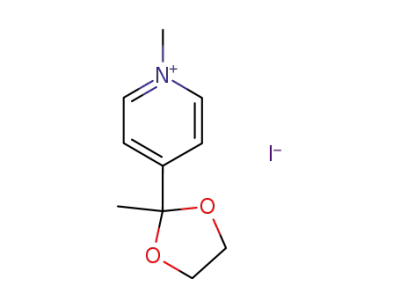
-
60553-34-6
1-methyl-4-(2-methyl-1,3-dioxolan-2-yl)pyridinium iodide

-
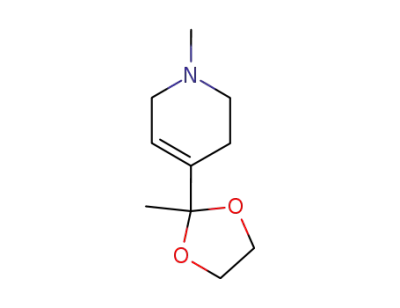
-
60553-32-4
1-methyl-4-(2-methyl-1,3-dioxolan-2-yl)-1,2,3,6-tetrahydropyridine
| Conditions | Yield |
|---|---|
|
With
sodium tetrahydroborate;
In
ethanol;
at 0 - 5 ℃;
for 1h;
|
90% |
|
With
sodium tetrahydroborate;
In
methanol;
|
|
|
With
sodium tetrahydroborate;
Yield given;
|
|
|
With
sodium tetrahydroborate;
In
ethanol;
at 0 - 5 ℃;
for 1h;
|
-
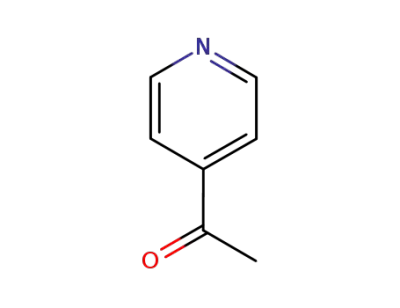
-
1122-54-9
methyl (4-pyridyl) ketone
-
-
60553-32-4
1-methyl-4-(2-methyl-1,3-dioxolan-2-yl)-1,2,3,6-tetrahydropyridine
| Conditions | Yield |
|---|---|
|
Multi-step reaction with 3 steps
1.1: conc. HCl / toluene
1.2: 96 percent / p-toluenesulfonic acid / toluene / 3 h / Heating
2.1: acetone / Heating
3.1: NaBH4 / ethanol / 1 h / 0 - 5 °C
With
hydrogenchloride; sodium tetrahydroborate;
In
ethanol; acetone; toluene;
|
|
|
Multi-step reaction with 3 steps
1: TsOH / toluene
2: acetonitrile / Heating
3: NaBH4 / methanol
With
sodium tetrahydroborate; toluene-4-sulfonic acid;
In
methanol; toluene; acetonitrile;
|
60553-32-4 Upstream products
-
60553-34-6
1-methyl-4-(2-methyl-1,3-dioxolan-2-yl)pyridinium iodide
-
1122-54-9
methyl (4-pyridyl) ketone
-
60553-33-5
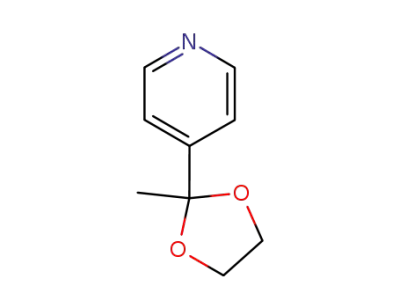
4-(2-methyl-1,3-dioxolan-2-yl)pyridine
60553-32-4 Downstream products
-
93841-61-3
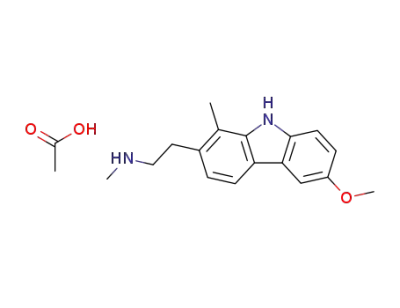
2-<2-(methylamino)ethyl>-6-methoxy-1-methyl-9H-carbazole acetate salt
-
517-81-7
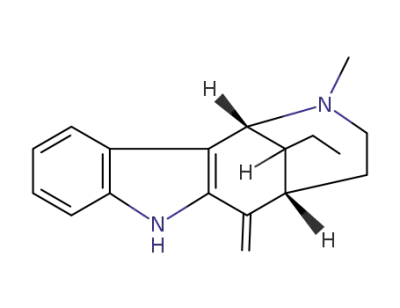
20-epiuleine
-
100752-88-3

1-(1,2,3,6-Tetrahydro-1-methyl-4-pyridinyl)-ethanone